Jian Zhan vs Porcelain
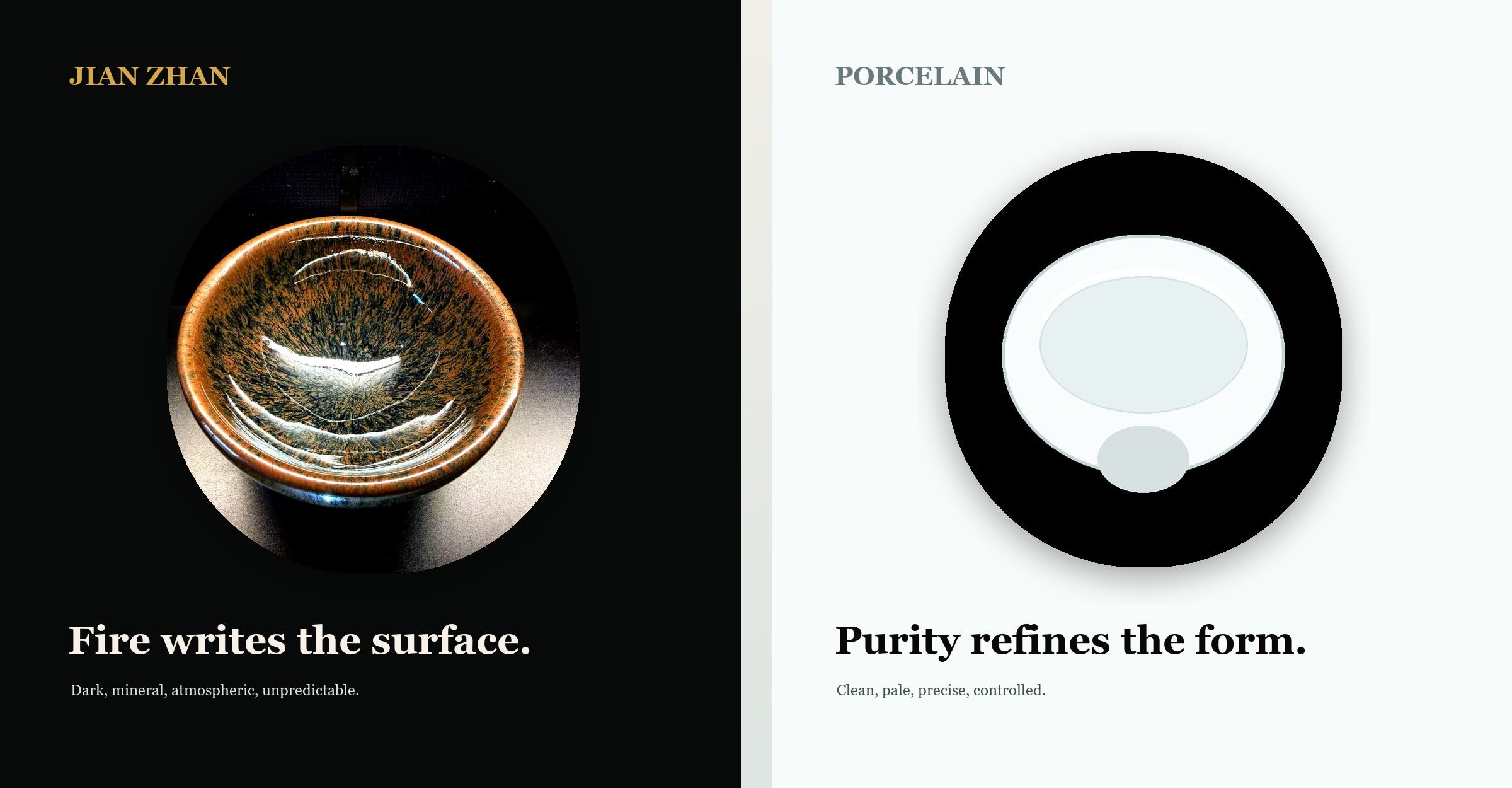
Porcelain may feel familiar: white, clean, precise. Jian Zhan is darker and more elemental. Its surface is born from iron-rich clay, mineral glaze, and the atmosphere inside a high-fired kiln.
The emotional difference
A porcelain cup can be perfect. A Jian Zhan cup can feel inevitable.
Porcelain is admired for refinement: pale body, clean glaze, controlled decoration, and elegant form. Jian Zhan is admired for a more primal reason. The surface is not simply applied. It happens under heat, reduction, mineral movement, and time.
Why it feels powerful
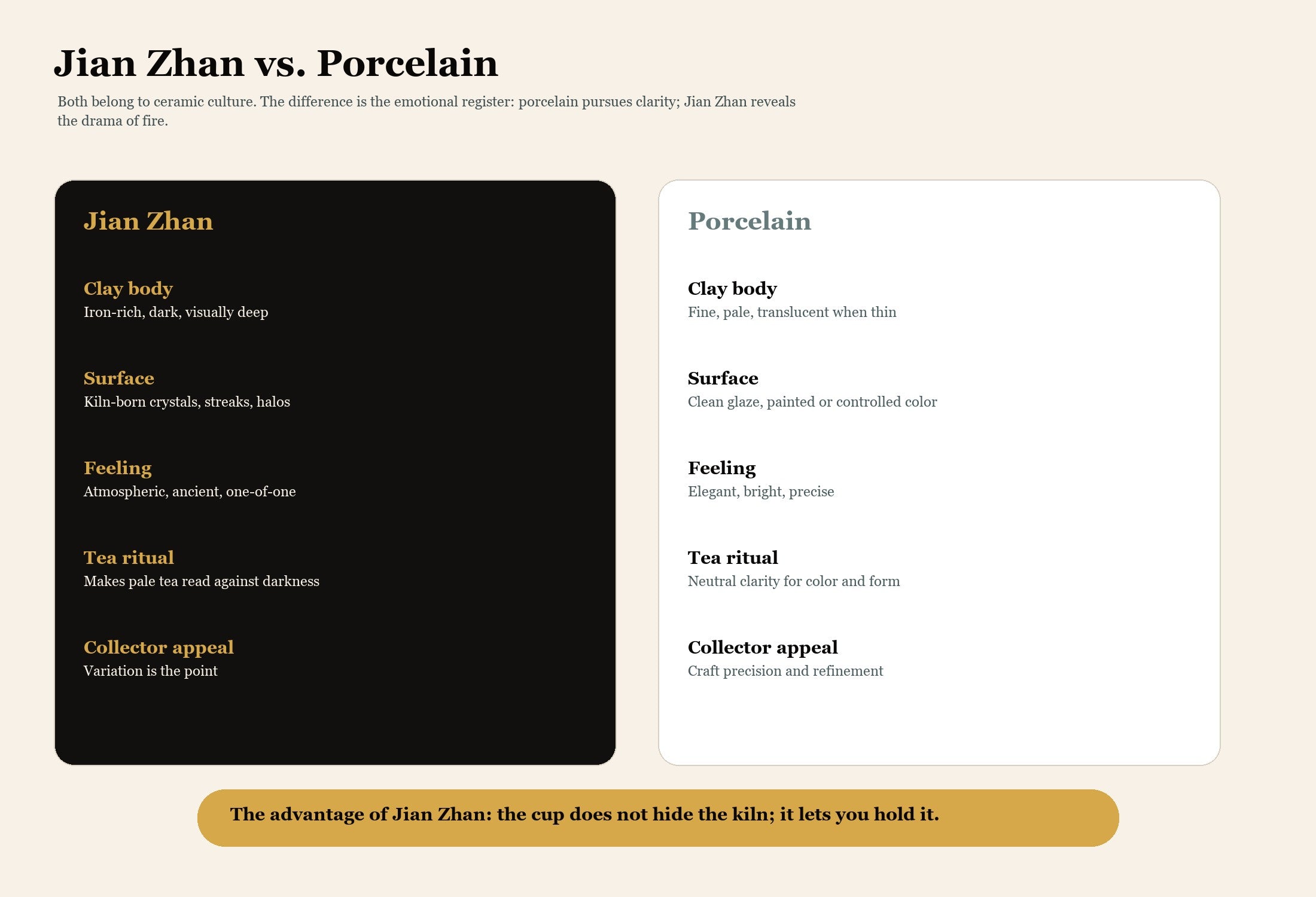
Porcelain: clarity and control
Porcelain is brilliant when the goal is brightness, delicacy, translucency, and exact painted decoration. It is a language of refinement.
Jian Zhan: atmosphere and transformation
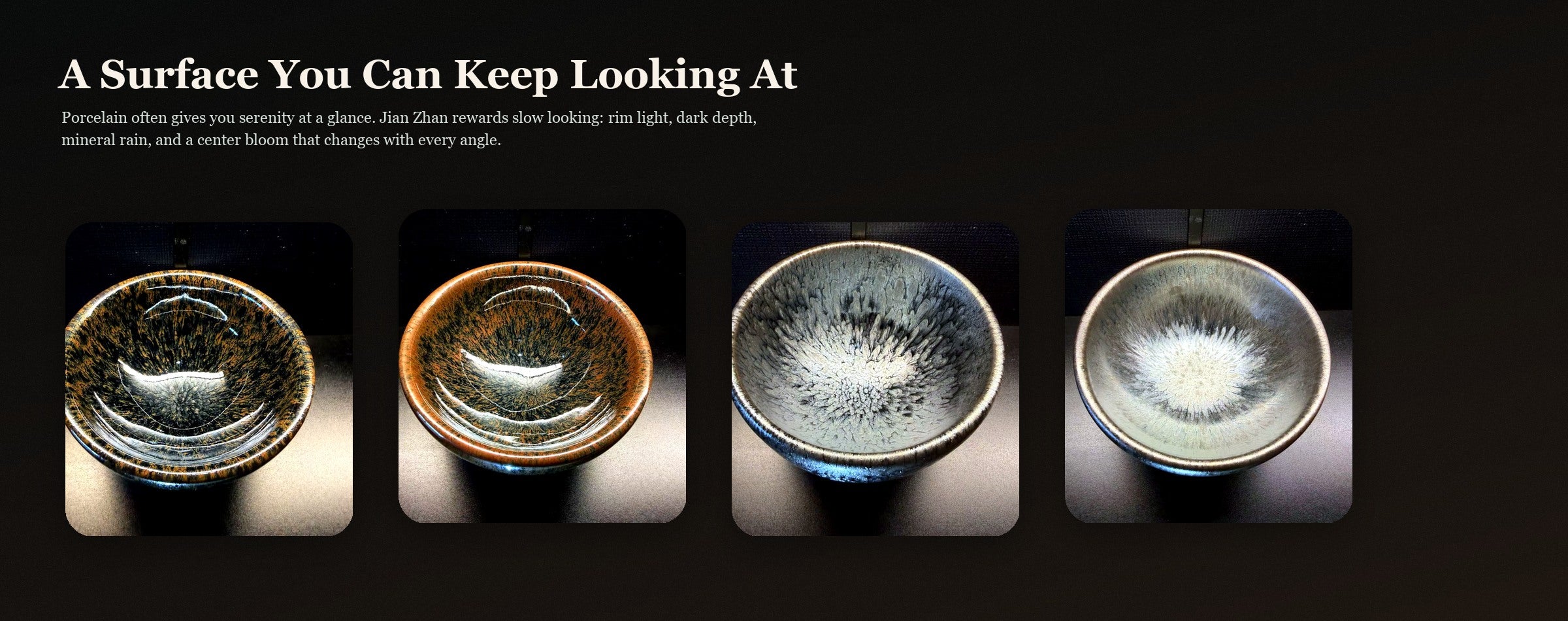
Jian Zhan is powerful when the goal is depth, mystery, and a surface that changes as light moves. It is a language of transformation.
Cultural force
Jian Zhan is not a neutral vessel. It is a small landscape.
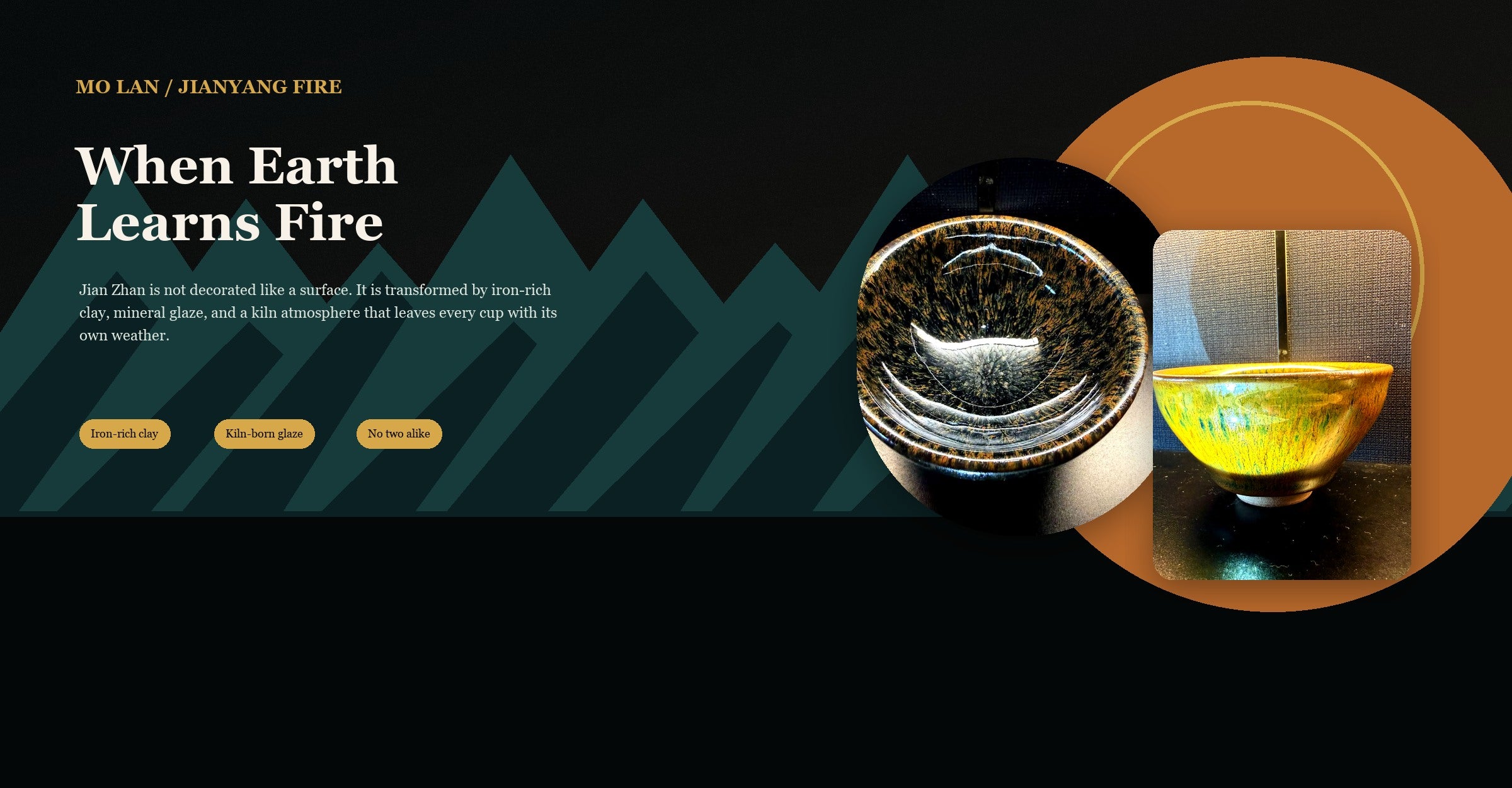
In the American home, Jian Zhan does something porcelain rarely does: it changes the emotional temperature of a table. The cup feels archaeological and contemporary at once, as if a mountain, a kiln, and a bowl of tea met in one object.
That is the Mo Lan point of view: not mass decoration, but quiet drama. Not sameness, but selected pieces with actual front and side views, named for what the eye can feel.
Practical tea ritual
The advantage is not only visual.
Jian Zhan
Best when you want a cup with presence: dark interior, mineral movement, grounded hand feel, and strong contrast against tea liquor.
Porcelain
Best when you want a neutral, bright, precise vessel that shows tea color clearly and keeps the visual field clean.
Why Mo Lan chooses Jian Zhan
For an independent teaware shop, the power is personality. Each piece can be photographed, named, and understood as its own object.
What buyers should know
Jian Zhan surfaces vary naturally. Look at the actual front and side views, then choose the piece whose surface feels alive to you.